If you use cooking spray in an air fryer and the basket has started feeling tacky, dull, or strangely harder to clean, you are probably not dealing with a “bad air fryer” problem. More often, it is a spray-choice problem, a spray-location problem, or simply a too-much-oil problem.
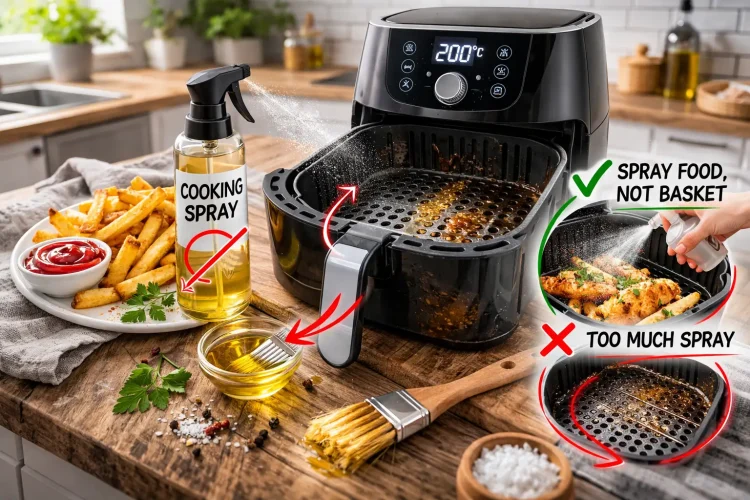
The confusing part is that cooking spray in an air fryer is not always wrong. A light mist on the food can help browning, help breading color more evenly, and reduce sticking on certain foods. However, repeated aerosol spray directly on a nonstick basket can slowly leave baked-on residue, make food stick more, and sometimes shorten the life of the surface.
That is why this topic trips people up. A recipe says “spray the basket.” A bottle says “nonstick.” Then, after a few weeks, fries cling to the mesh, cleanup gets worse, and the basket starts feeling gummy even when it looks clean. The good news is that this is usually fixable early, and it is easy to prevent once you know what actually matters.
A 60-Second Mini-Check for Cooking Spray in an Air Fryer
Before you change anything, do this quick check.
Ask yourself these four questions:
-
Does the basket feel sticky even after washing and drying?
-
Do you see amber, brown, or slightly shiny patches that do not scrub off easily?
-
Has food started sticking more than it did a month ago?
-
Do you usually spray the basket itself instead of coating the food lightly?
If you answered yes to two or more, the issue is probably spray buildup rather than normal grease alone.
If you answered no to most of them, your problem may be something else, such as sugary marinades, worn coating, overcrowding, or food that simply needs a light oil coating on the outside.
Why Air Fryer Food Sometimes Sticks to the Basket (And How to Prevent It)
FAQ: Cooking Spray in an Air Fryer
Can you use cooking spray in an air fryer?
Why does my air fryer basket feel sticky after using cooking spray?
Is olive oil spray okay in an air fryer?
Should I spray the basket or the food?
Do frozen foods need cooking spray in an air fryer?
Can cooking spray damage a nonstick air fryer basket?
How do I remove old cooking spray residue from an air fryer basket?
Air Fryer Nonstick Coating Peeling: Why It Happens (and How to Prevent It)
What Cooking Spray in an Air Fryer Gets Right — and What It Gets Wrong
Cooking spray in an air fryer exists for a reason. Some foods genuinely do better with a very light oil coating. Homemade fries brown more evenly. Breaded chicken often colors better. Lean vegetables can look less dry. So, the idea itself is not the problem.
The problem is how people use it.
Air fryers do not need the same kind of oil handling as a frying pan or baking sheet. The hot air is already doing most of the work. Therefore, the right amount of oil is usually much smaller than people think. When too much oil lands on the basket walls, mesh, corners, and nonstick coating, it does not improve the food much. Instead, it starts building a layer where you do not want it.
A common pattern is that people think they have a “bad basket” when the real problem started with a few weeks of spraying the basket out of habit.
How to Clean an Air Fryer Step by Step (Without Damaging It)
Why Aerosol Cooking Spray in an Air Fryer Gets Sticky Over Time

This is the part many people miss.
When you use pressurized aerosol cooking spray in an air fryer, the mist does not land only on the food. It coats the basket, the edges, and sometimes parts of the cooking chamber. Then it heats, cools, and reheats over and over. That is how you end up with a residue layer that feels tacky, grabs crumbs, and makes normal washing less effective.
The result is frustrating because the basket may still look mostly fine from a distance. However, in real use, food begins to cling more, breading tears more easily, and the surface starts losing that smooth, easy-clean feel.
Signs the problem is buildup, not just ordinary grease
Buildup usually shows up in a few familiar ways:
-
The basket feels sticky even when it is dry.
-
Brown patches seem “glued on” instead of wiping off.
-
Food that never used to stick suddenly sticks.
-
You notice a slightly burnt oil smell even after cleaning.
-
Cleanup gets worse even though your cooking habits have not changed much.
Why more spray rarely gives better crispiness
More spray feels like it should mean more browning. In reality, it often means the opposite.
If the surface of the food is too oily, crumbs can darken too fast before the inside is ready. Meanwhile, excess oil drips away instead of helping. So, you end up with more mess, not necessarily better texture.
That is why a thin, even coat works better than a heavy blast. The goal is not to wet the basket. The goal is to lightly coat the part of the food that needs help browning.
Air Fryer Smoking: White Smoke vs Black Smoke (What It Means + Safe Fixes)
When Cooking Spray in an Air Fryer Is Actually Fine

There are situations where cooking spray in an air fryer makes sense.
For example, it can help with homemade potatoes, breaded chicken, panko-coated fish, or vegetables that tend to look dry before they brown. In those cases, a very light coat on the outside of the food can improve color and texture.
The safest version usually looks like this:
-
Use a pump-style spray or mister, not a heavy aerosol blast.
-
Spray the food lightly, not the empty basket.
-
Use just enough to give the surface a faint sheen.
-
Skip extra spray for frozen foods that are already pre-oiled.
-
Do not pour oil into the bottom pan.
In other words, cooking spray in an air fryer is most useful when it is controlled, light, and aimed at the food itself.
Why Food Turns Dry in an Air Fryer (And How to Keep It Juicy)
Better Ways to Use Oil Than Spraying the Basket
If your goal is better browning without residue, there are better methods than spraying the basket directly.
Toss food in a bowl with a small amount of oil
This is one of the cleanest methods. Add a small amount of oil to a bowl, toss the food, and then place the food in the basket. You get better coverage and much less waste.
Brush oil onto breadcrumbs or coating
Breaded foods often need only a little help on the outside. Brushing or lightly misting the coating gives you color where you need it without soaking the basket.
Mist the food after seasoning
This works well for vegetables, chicken pieces, and homemade fries. First season the food. Then add a very light mist so the surface browns without getting greasy.
Use less than your instinct tells you
This sounds too simple, but it matters. Most people use more oil in an air fryer than they actually need. When in doubt, start light. You can always add a little next time if the result looks dry.
White Film on Air Fryer Parts: Detergent vs Hard Water (Sticky Residue Fix)
Common Mistakes With Cooking Spray in an Air Fryer
These are the habits that cause most of the trouble.
Spraying an empty preheated basket
This is probably the biggest mistake. The spray lands directly on a hot nonstick surface, bakes quickly, and starts forming residue where food is not even sitting yet.
Using aerosol spray every single cook
Even if each layer seems tiny, repeated use adds up. Over time, that is when the basket starts feeling gummy and harder to wash.
Spraying from too close and too heavily
A short, heavy burst creates wet spots instead of a fine, even layer. Those wet spots often turn into sticky patches later.
Using spray to solve a different problem
Sometimes food is sticking because the basket is overcrowded, the coating is worn, the food is too wet, or the breading is falling off. More spray will not fix those root causes. It only adds another layer to clean.
Stacked Dual-Basket Air Fryer Cooks Unevenly: Why the Top Drawer Browns Faster (and How to Fix It)
Mini Examples So You Can Spot the Difference Faster
Here are a few quick examples that make this easier to judge.
Example 1: Homemade fries
You spray the basket heavily and add potatoes. They look oily, but not especially crisp. After the cook, the fries release okay, yet the basket feels tacky the next day.
A better move: toss the potatoes with a small amount of oil in a bowl first, then air fry them in a single layer.
Example 2: Breaded chicken cutlets
You want better color, so you spray the empty basket and then spray the tops heavily too. The crumbs brown fast in spots, but the underside tears when you lift the cutlets.
A better move: lightly coat the breading itself and skip spraying the basket.
Example 3: Frozen nuggets
You add extra spray because you want more crispiness. Instead, the basket gets greasy and cleanup takes longer.
A better move: cook them without added spray first. Many frozen foods already contain enough oil for good browning.
Best Bakeware for an Air Fryer: Metal vs Glass vs Ceramic (What Changes Results)
What to Do Now If You Think Spray Buildup Is the Problem

If your basket has already started feeling sticky, do not panic and do not attack it with aggressive tools.
Follow this order instead:
-
Stop using aerosol spray for the next several cooks.
-
Soak the basket in warm, soapy water long enough to soften residue.
-
Wash with a soft sponge or cloth only.
-
Dry the basket fully and feel the surface with clean fingers.
-
On your next cook, oil the food lightly instead of spraying the basket.
-
Compare cleanup after that batch.
If the basket improves, you have probably found the root cause.
If it still feels rough, sticky, or patchy after careful cleaning, the issue may be older buildup or wear to the nonstick surface itself.
Why Silicone Air Fryer Liners Make Food Soggy (And the 5-Minute Fixes)
When to Stop Using the Basket or Replace Parts
Not every sticky basket needs replacement. Sometimes the fix is simply changing how you use oil. However, there is a point where cleaning and habit changes are no longer enough.
Consider stopping use and replacing the basket or contacting the manufacturer if you notice any of the following:
-
The coating is flaking, peeling, or blistering.
-
Deep scratches are exposing metal.
-
A burnt residue smell returns immediately after cleaning.
-
Food sticks badly even after you stop using aerosol spray and clean gently.
-
The basket has warped or no longer fits or cooks evenly.
This matters because once a nonstick surface is physically failing, the problem is no longer just about oil use. At that stage, it is a wear issue.
Aluminum Foil in an Air Fryer: What Happens, What’s Safe, and What to Avoid
What to Do Now
If you want the simplest version, do this today: stop spraying the basket, switch to a light pump spray or brush of oil on the food, and see how the next two or three cooks behave.
That small change often tells you a lot. If sticking drops and cleanup improves, your air fryer probably did not need a new basket after all. It just needed a better oil method.
Quick Recap
Cooking spray in an air fryer is not automatically wrong. The real issue is usually how it is used.
A light coat on the food can help. Repeated aerosol spray on the basket can create buildup, make cleanup worse, and leave the surface feeling sticky.
So, if your basket has started grabbing food, feeling tacky, or looking oddly brown in patches, do not assume the air fryer is failing. First, change the spray habit. In many cases, that is the real fix.
Safety note: This article is general information only. Always follow your model’s manual first. Stop using the basket if you suspect coating failure or any unsafe surface damage, and contact the manufacturer or a qualified professional when needed.

Part of our Air Fryer Troubleshooting Hub
Sources (optional)
- https://instantpot.com/pages/frequently-asked-questions — Instant Pot FAQ
- https://www.usa.philips.com/c-f/XC000003626/how-and-when-to-use-oil-in-my-philips-airfryer — Philips: How and when to use oil in my Philips Airfryer
- https://support.ninjakitchen.com/hc/en-us/articles/18346102285596-Tips-Tricks-How-to-Prevent-Food-From-Sticking — Ninja: Tips & Tricks – How to Prevent Food From Sticking