If you’ve ever pulled out a basket thinking, “This should be perfect by now,” and it’s either half-raw or oddly over-browned, you’re not imagining things. Air fryers can cook fast, but they don’t always cook predictably. An air fryer thermostat accuracy test helps you figure out whether your unit is truly running hot/cold—or whether something else is making it feel that way.
Here’s the part most people miss: a lot of “temperature problems” are actually airflow problems. Or overcrowding. Or a turbo-style mode that behaves like a completely different appliance. This guide keeps it simple and practical, so you can stop guessing.
Safety note (read first): Use only heat-safe thermometers rated for oven temperatures. Keep anything you place inside well away from the heating element. Don’t attempt internal repairs. If you notice smoke from the unit itself, a burning/electrical smell, sparking, melting plastic, or a hot plug/cord, stop using the air fryer and contact the manufacturer or a qualified technician.
FAQ: Air Fryer Thermostat Accuracy
1) Is it normal for an air fryer’s temperature to swing up and down?
Yes. Air fryers cycle heat. So you’ll see the temperature drift above and below your set point. A single snapshot rarely tells the truth—what matters is the pattern once things settle.
2) What tool gives the most trustworthy result?
A high-heat oven thermometer is the simplest. If your model allows it safely, a probe thermometer with a long, heat-safe cable can be even better because you can read it without repeatedly opening the basket.
3) Where should the thermometer go?
As close to the center of the cooking space as you can manage—where food sits—without touching the basket walls or base. If it touches metal, you’ll measure hot metal, not air temperature.
4) Can I use an IR “laser” thermometer?
Usually not for this. IR thermometers read surfaces, and shiny basket metal can give misleading numbers. They’re useful for spotting hot spots on surfaces, but not ideal for checking air temperature behavior.
5) Do I need to preheat for the test?
Yes. You’re testing how the unit behaves in normal cycling mode, not its “heat-up sprint.” Preheat the way you typically do.
6) Why does “Max Crisp” (or similar modes) feel hotter than the same temperature in Air Fry mode?
Because modes can change fan speed and heat strategy. Some “max” modes push more aggressive airflow and higher effective heat on the food. The number on the screen doesn’t always describe how intense it feels inside the basket.
7) My test looks okay, but my food still cooks oddly. What does that mean?
That’s usually technique or airflow: a crowded basket, wet coatings, blocked vents, or frequent basket-opening. The thermostat can be fine and the food can still turn out inconsistent.
8) Can you truly “calibrate” an air fryer like an oven?
Many air fryers don’t offer a real calibration offset setting. In that case, “calibration” means learning your unit’s habits and applying a consistent adjustment (a small temperature or time offset) so results stop surprising you.
When to Replace Your Air Fryer: 5 Signs It’s Time for a New One
60-Second Mini-Check: Is This Really a Temperature Problem?
Before you run a full air fryer thermostat accuracy test, do this quick filter. It’s boring, but it saves time.
-
Give it space: Make sure the vents aren’t blocked and the unit isn’t shoved tight against a wall.
-
Check the load: If food is piled up, it can cook like the temperature is “too low” even when it’s correct.
-
Look for grease buildup: Heavy grease near the heater/fan area can mess with airflow and heat transfer.
-
Spot the pattern: Does this happen with multiple simple foods, or only one tricky recipe?
If it happens with lots of foods (even easy ones), keep going.
Tools That Work Without Turning This Into a Shopping Trip
 Which thermometer for your air fryer?
You don’t need special gear, but you do need something that can survive high heat and be read easily.
The simple tool: an oven thermometer
A basic analog or digital oven thermometer rated for oven temps is enough for most people. You want one with a clear face you can read quickly.
The “don’t-open-the-drawer” tool: a probe thermometer (if your model allows it)
If your air fryer design lets a cable pass safely without pinching, a probe thermometer is often the easiest way to get honest readings. Less opening = less heat loss = less confusion.
If you already own a good thermometer brand
Great. ThermoWorks is a common example people trust, and some well-reviewed CDN-style oven thermometers can also work. The brand matters less than accuracy, heat rating, and the ability to read it without touching hot metal or guessing.
Air Fryer vs Oven: What’s the Difference?
Quick Step Most People Skip: Check the Thermometer First
This sounds silly until it saves you. A cheap or damaged thermometer can make a perfectly normal air fryer look “wrong.”
The ice-bath check (fast and reliable)
 Verify thermometer accuracy with ice bath
-
Fill a glass with crushed ice.
-
Add a little water and stir.
-
Insert the thermometer so it’s not touching the glass.
-
After a minute, it should read near 0°C / 32°F.
If it’s clearly off, don’t “calibrate” your air fryer around a bad tool. Fix the tool problem first.
Boiling water (optional, but remember altitude)
Boiling water should read close to 100°C / 212°F, but the exact number changes with altitude. If you live high above sea level, boiling won’t land exactly on 100°C.
What “Accuracy” Looks Like in an Air Fryer
Air fryers don’t behave like a quiet oven. They blast air. They cycle heat. And the sensor isn’t always measuring exactly where your food sits.
So “accurate” usually means this:
-
It settles into a repeatable rhythm.
-
Your readings don’t look wildly chaotic.
-
If it’s off, it’s off in a consistent direction (always a bit hot, or always a bit cool).
That consistency is actually good news. A consistent offset is easy to cook around.
Why Is My Air Fryer Smoking? (White Smoke vs Black Smoke + Fixes)
The Air Fryer Thermostat Accuracy Test (Safe and Repeatable)
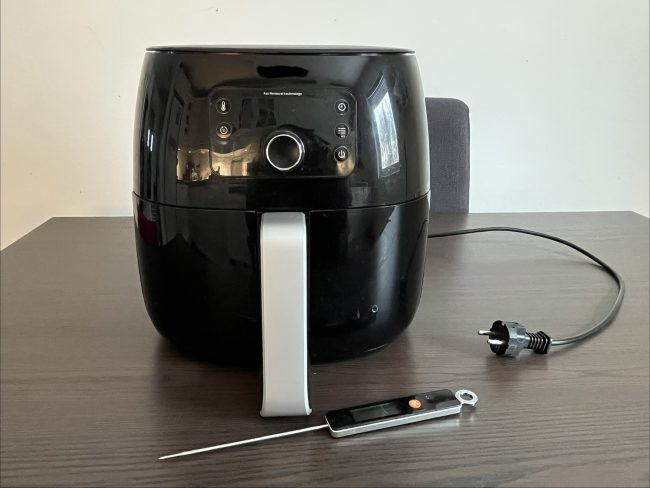
 Testing air fryer thermostat accuracy
This air fryer thermostat accuracy test is designed to be repeatable. That matters more than chasing a perfect number.
What you need
-
Oven thermometer OR a probe thermometer rated for high heat
-
Heat gloves or tongs
-
A timer (your phone is fine)
Step 1: Choose one temperature you actually use
Pick a common temp like 200°C / 390°F. Don’t start with edge-case settings.
Step 2: Preheat like you normally do
Do your usual preheat routine. If you never preheat, run it for a short warm-up so it’s not ice-cold inside.
Step 3: Place the thermometer like food, not like a science experiment
-
Put it near the center of the basket space.
-
Keep it off the walls and not touching the basket base.
-
Keep it away from the top heating element.
If you’re using a probe, make sure the cable is not pinched, not resting against the hottest surfaces, and not interfering with the basket seating.
Step 4: Let it settle, then take three readings
This is where the “human” part matters: don’t panic after one glance.
Take:
-
Reading 1 after it has been running at temp for a few minutes
-
Reading 2 a few minutes later
-
Reading 3 a few minutes later
Try to open the drawer as little as possible. If your unit pauses when opened, keep openings quick and consistent.
Air Fryer Turns On by Itself: What It Means, Safe Fixes, and When to Unplug for Good
Step 5 (optional): Repeat at a second temperature
If your issue is specifically “low temp baking” or “reheating burns,” repeat the test at a lower setting like 160–170°C.
Interpreting Your Results Without Overthinking It
Here’s a simple way to read your own data:
If the readings are a bit jumpy but stay in the same neighborhood
That’s typical cycling. Your air fryer is behaving normally.
If the readings sit consistently above the set temperature
Your unit likely runs hot. That doesn’t mean it’s “broken.” It means you should cook with a small offset.
If the readings sit consistently below the set temperature
Your unit likely runs cool. Again, not necessarily broken—just different.
If the readings are chaotic and never settle
That’s the one that deserves attention. If the unit won’t stabilize, resets, or behaves erratically, stop and check your manual/support options.
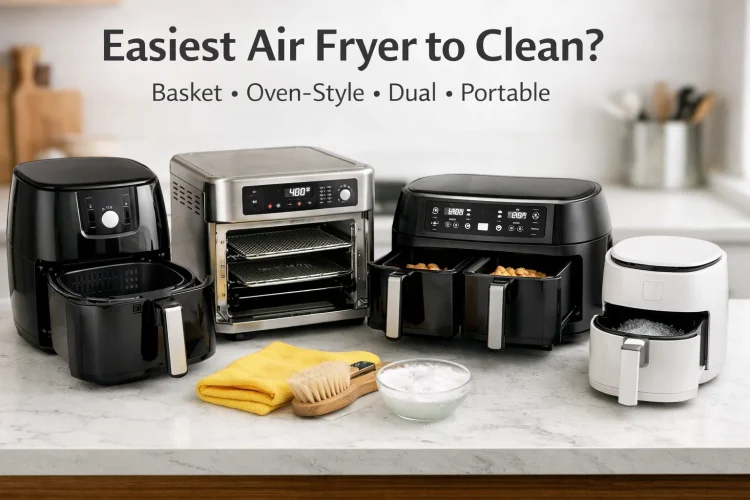
Why Two Air Fryers Can Feel Totally Different at the Same Temperature
 Why air fryers cook differently
This is where people get frustrated, because it feels unfair.
-
Basket-style models often blast food directly with high-speed airflow.
-
Larger oven-style air fryers can have different airflow paths and sensor placement.
-
Modes can change fan speed and heating behavior.
So “200°C” can feel gentle in one unit and aggressive in another, especially in high-power modes. If your complaint only happens in one mode, run your air fryer thermostat accuracy test in that mode first.
Dual Basket Air Fryer Sync/Match Cook Not Working: How to Finish Both Baskets Together
How to “Calibrate” Your Cooking (Even If You Can’t Calibrate the Machine)
If your air fryer doesn’t offer a real temperature offset setting, do the practical version.
Make a simple offset rule
Pick one you can remember:
-
Runs hot → cook about 10°C lower or shorten time slightly
-
Runs cool → cook about 10°C higher or add time in small steps
Don’t make it complicated. You can refine later.
Confirm with one benchmark cook
Use one simple food you make often (frozen fries, chicken thighs, roasted veg). Cook it twice with the same load and method. If your offset rule fixes the benchmark, it will improve most meals.
Air Fryer Plug Gets Hot: Is It Normal? Safe Checks!
Common Reasons the Test Looks Wrong (Even When the Thermostat Is Fine)
Touching metal
If the thermometer touches the basket, your reading becomes “metal temperature,” not “air temperature.”
Reading too early
Right after preheat, some units overshoot before settling into normal cycling.
Opening the drawer repeatedly
Every opening dumps heat. It can make a normal unit look “too cool.”
Real cooking is overcrowded
A clean empty test can look fine, but a packed basket can still cook unevenly and feel “cold.”
3 Common Mistakes That Make People Blame the Thermostat
-
Overfilling the basket and expecting perfect timing
-
Using an aggressive mode for delicate foods, then calling it “too hot”
-
Changing time/temperature mid-cook constantly, then wondering why results vary
Why Does My Air Fryer Smell Bad When Cooking? 9 Causes + Fast Fixes (Safe Order)
What to Do Now
-
Do the 60-second mini-check (space, vents, load, grease).
-
Run the air fryer thermostat accuracy test at one common temperature and take three readings.
-
If it’s consistently hot or cool, set a simple offset rule and confirm with one benchmark cook.
-
If it’s unstable or unsafe, stop and contact support.
Air Fryer Timer Not Working: Stuck, Not Counting Down, or Ends Early (Safe Fixes)
When to Stop and Treat It as a Safety/Service Issue
Stop troubleshooting and get help if you notice:
-
smoke from the unit itself, burning smell, sparking, melting plastic
-
hot plug/cord, discoloration, or overheating marks
-
repeated resets/shutdowns becoming frequent
-
the unit won’t heat reliably at all
Safety note
This is general information only. Follow your manual. Don’t attempt internal repairs. If you suspect an electrical fault, overheating, smoke, or damage, stop using the air fryer and contact the manufacturer or a qualified professional.

Smart Helper Guides
Sources (optional)
-
ThermoWorks — Ice-bath method for checking thermometer accuracy at home. https://www.thermoworks.com/thermapen101-creating-an-icebath/
-
Campden BRI — Testing highlights that air fryer air temperature can differ from dial settings across models (shows real variation). https://www.campdenbri.co.uk/blogs/air-fryer-cooking-instructions-challenges.php
-
HSE (Health and Safety Executive) — Electrical equipment user checks (cables, plugs, overheating signs). https://www.hse.gov.uk/electricity/electricequip.htm