Updated: February 03, 2026
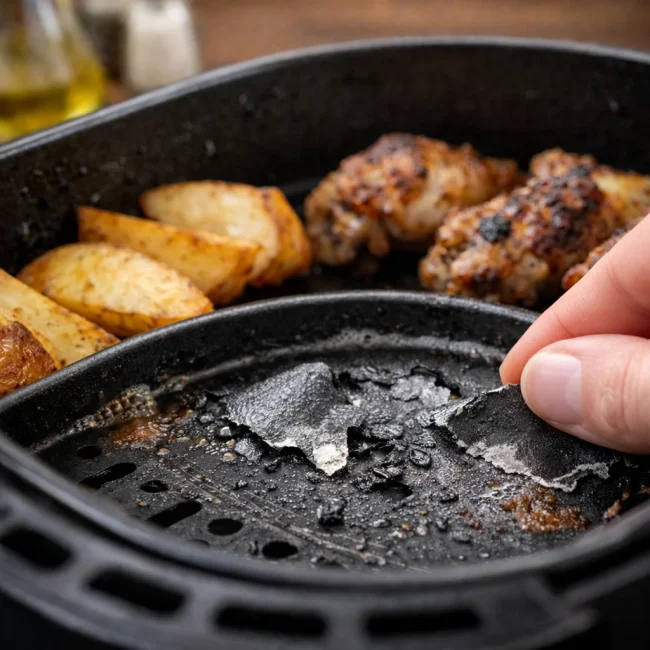
It usually starts with something small you can’t unsee. A dull patch where the basket used to look smooth. This could be an early sign of your air fryer nonstick coating peeling. A corner that feels a little rough. Or the worst version: tiny dark specks that make you stare at your food like it just betrayed you.
If you’re dealing with air fryer nonstick coating peeling, you don’t need a lecture—you need clarity. Because two very different problems can look almost identical at first: baked-on residue (gross, but fixable) versus real coating damage (which tends to spread once it starts). The trick is learning how to tell them apart without scrubbing your basket to death in the process.
Let’s walk through it in a way that keeps your dinner plans intact and saves your next basket from the same fate.
The “two look-alikes” problem: peeling vs. baked-on film
Here’s the annoying truth: baskets can look ruined when they’re just coated in a stubborn, baked-on layer of oil and seasoning. That layer can turn sticky, dark, and patchy—almost like peeling. And when people try to “fix it” with aggressive scrubbing, they sometimes create the real damage they were afraid of.
Signs it’s probably baked-on residue
-
The patch looks brown/amber (like a thin varnish), not chipped.
-
It feels mostly smooth (maybe tacky), not jagged.
-
It’s worst in corners and under the crisper plate, where grease hides.
-
It changes after soaking (even a little).
Signs it’s likely real peeling
-
You can feel a raised edge with your fingertip.
-
The surface looks bubbled or lifted, like it’s separating.
-
You see flakes in the basket or on food.
-
Food suddenly sticks only in that spot, even when the basket is clean.
If you remember one thing: don’t start with force. Start with information.
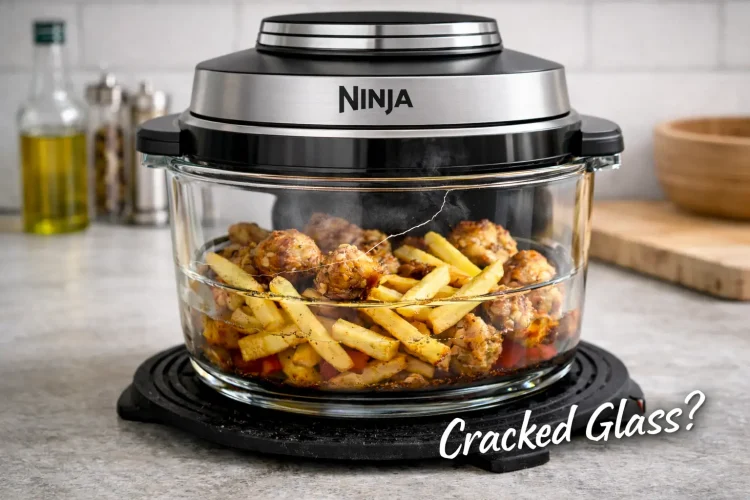
Ninja Crispi Glass Air Fryer Cracked Glass: How to Avoid It (Thermal-Shock Rules)
A gentle 10-minute test (that prevents “panic scrubbing”)

Before you decide anything, do this:
-
Soak basket + insert in warm soapy water for 10–15 minutes.
-
Wipe gently with a soft sponge.
If it’s residue, it will soften, smear, fade, or at least change. If it’s air fryer nonstick coating peeling, it usually stays sharp-edged and stubborn in the exact same shape.
Easiest Air Fryer to Clean: Basket vs Oven-Style vs Dual vs Portable (Real Pros & Cons)
Is it safe if the coating is peeling?
This is where people want a yes/no answer, and real life gives you a “depends.”
-
Light scratches, no flakes: many people keep using the basket carefully.
-
Chips, lifted edges, or flakes: the smart move is to stop using that basket/insert and replace it.
Even when the risk of ingesting tiny particles is considered low under normal use, you’re still dealing with a damaged food-contact surface—and the damage tends to grow. Also, the basket becomes harder to clean, which pushes you toward harsher cleaning… which speeds up the deterioration. It’s a loop.
And one safety note that matters: don’t run coated cookware empty at very high temperatures. Overheating nonstick coatings is the scenario every official safety guide warns against.
Air Fryer Not Making Food Crispy? 9 Fast Fixes That Work
Why air fryer baskets peel in the first place
Most baskets don’t fail from one dramatic mistake. They fail from a handful of tiny habits that repeat.
1) The “quick scrape” with metal tools
The coating gets nicked by metal tongs, a fork, or that one stubborn piece of cheese you try to pry loose. The nick becomes a weak point. Heat expands and contracts the surface over and over. Washing catches the edge. The chip grows.
This is the most common beginning of air fryer nonstick coating peeling.
Better tools: silicone tongs, wooden chopsticks, a soft silicone spatula.
2) Abrasive cleaning (the green pad trap)
The basket gets sticky. You scrub harder. It looks better for five minutes… and then food sticks more the next time. That’s because abrasive pads can wear the surface. Many air fryer care guides explicitly warn to avoid abrasive cleaning materials on nonstick-coated baskets.
If something is baked on, soaking is the power move—not pressure.
3) Aerosol cooking sprays (the “invisible glue” effect)
Aerosol sprays can create a baked-on film that’s difficult to remove. That film makes food stick, looks like staining, and pushes people into aggressive scrubbing. Some manufacturers specifically advise against aerosol sprays on nonstick surfaces because they cause buildup and can damage the coating.
If you like the convenience of spraying oil, use a manual oil mister (pure oil) instead of aerosol cans.
4) Dishwasher wear (even when it says “dishwasher safe”)
Some baskets tolerate dishwashers. Some gradually degrade faster with repeated cycles. Heat, detergents, and abrasion from other items can all play a role—especially if the basket rubs against metal utensils during the wash.
If you want max lifespan: hand wash most of the time.
5) Accessories rubbing the coating
Racks and pans that fit too tightly can scrape corners and edges every time you insert or remove them. Corners are usually where damage starts because they take the most friction.
A simple rule: if you can hear or feel scraping, it’s not “just a little.” It’s repeated wear.
Air Fryer Exterior Hot: (What’s Normal vs Unsafe)
What to do right now (without making it worse)

If you noticed damage today and you still need to cook, here’s the calm plan:
Step 1: Confirm what it is
Do the soak test. Don’t attack it dry.
https://smarthelperguides.com/2025/12/19/how-often-should-you-clean-an-air-fryer/
Step 2: If flakes are involved, avoid direct contact
If you see flakes or lifting edges, treat it like you would a chipped nonstick pan: don’t keep dragging food across it.
A practical workaround for tonight:
-
cook in a small air fryer-safe metal pan placed inside the basket (so food isn’t touching the damaged surface)
Step 3: Clean residue the “nonstick-friendly” way
If it’s mostly sticky film:
-
warm soapy soak
-
soft sponge
-
for stubborn grease: baking soda + water paste, gently (many manuals recommend a baking soda paste for stubborn grease).
Step 4: Decide if you’re in “prevention” mode or “replacement” mode
If the surface is intact and it was residue: prevention will help a lot.
If the surface is chipped or flaking: prevention helps, but replacement is usually the real fix.
Air Fryer Not Making Food Crispy? 9 Fast Fixes That Work
When you should replace the basket/insert
Replace if you have any of these:
-
Flakes showing up in the basket or on food
-
A chip you can catch with a fingernail (raised edge)
-
Multiple peeling spots spreading over time
-
Exposed metal that discolors or starts rusting
-
The basket is clean but food sticks constantly and aggressively
At that stage, air fryer nonstick coating peeling isn’t a cleaning problem anymore—it’s a worn surface problem.
How to prevent it from happening again (realistic habits that stick)
You don’t need a complicated routine. You need a few rules you’ll actually follow.
Switch to “no-scratch cooking”
-
silicone or wood tools only
-
never cut food in the basket
-
don’t stir aggressively against the surface—lift and turn instead
Clean with “soak-first” discipline
The most expensive cleaning habit is scrubbing hard when you’re tired.
Instead:
-
soak while you eat or while the basket is still warm (not hot)
-
wipe gently
-
repeat if needed
Avoid aerosol sprays
This one change alone can reduce sticky buildup and the urge to scrub. Manufacturer guidance on nonstick cookware commonly warns that aerosol sprays can leave buildup and damage the coating.
Store it like it matters
Stacking the basket with metal tools inside it, or storing it under heavy cookware, can create micro-scratches that grow into peeling later. If you stack, put a soft cloth or liner between pieces.
Keep corners clean
Corners are where grease hides and carbonizes. If you keep corners clean, you avoid the “scrub harder” moment later—which is when damage often begins.
White Film on Air Fryer Parts: Detergent vs Hard Water (Sticky Residue Fix)
FAQ: Air Fryer Nonstick Coating Peeling
Is my air fryer basket actually peeling, or is it just baked-on residue?
If the patch is smooth-ish, brown/amber, and changes after a warm soapy soak, it’s usually baked-on oil film. If you can feel a raised edge, see bubbling/lifting, or notice flakes, that’s more consistent with real peeling.
Is it safe to keep using an air fryer basket if the nonstick coating is peeling?
If there are flakes, lifted edges, or exposed metal, treat that as a stop signal for that basket/insert and replace it. If it’s only light scratches with no lifting or flaking, many people keep using it carefully—but once peeling starts, it usually spreads.
Can I keep cooking if I see flakes in the basket or on my food?
No. If you’re seeing flakes, don’t “push through” the cook. Stop using that basket/insert and switch to a replacement part (or use an air-fryer-safe dish that keeps food off the damaged surface until you replace it).
Can I fix peeling by scrubbing harder or using a stronger cleaner?
Hard scrubbing usually makes it worse. Aggressive pads and scraping can catch a lifted edge and enlarge the peel. If you suspect residue, the safest approach is soak-first + gentle wipe, then reassess.
Do aerosol cooking sprays really damage the coating?
They can. The common problem is buildup: spray leaves a sticky film that bakes on, then food sticks, then people scrub harder—so the coating wears faster. If you want spray convenience, a refillable oil mister tends to cause less “film.”
Does the dishwasher cause nonstick coating peeling?
It can speed up wear for some baskets. Heat + detergent + abrasion (especially if the basket rubs other items) can gradually dull and weaken the surface. If you want maximum lifespan, hand-washing most of the time is usually gentler.
If it’s only scratched (not peeling), when should I replace the basket?
Replace when scratches turn into lifting edges, when you can catch a chip with your fingernail, when food sticks aggressively in one spot despite cleaning, or when you see exposed metal/discoloration/rust. Those are signs the surface is no longer stable.
Can I re-coat the basket myself?
Not in a reliable, food-safe way for most people. DIY re-coating products are inconsistent, and the safest path is usually a genuine replacement basket/insert made for your model.
When to Replace Your Air Fryer: 5 Signs It’s Time for a New One
The bottom line
If it’s residue, you can usually rescue the basket with gentle cleaning and a couple of habit changes. If it’s true air fryer nonstick coating peeling—especially flaking—replacement is the sane, low-stress solution.
And the best prevention is boring (which is good): softer tools, gentler cleaning, less baked-on buildup, and no aerosol spray turning your basket into a sticky science project.

Part of our Air Fryer Troubleshooting Hub
Want the full list of fixes? Go here: Air Fryer Troubleshooting: The Complete Fix-It Guide
Sources
-
BfR (German Federal Institute for Risk Assessment) — FAQ on PTFE non-stick coatings, safe use, and overheating guidance. Bundesinstitut für Risikobewertung
-
KitchenAid Product Help / Support — guidance warning against aerosol cooking sprays on nonstick cookware due to buildup and coating damage. Product Help | KitchenAid+1
-
Air fryer user manual (Care & Maintenance) — notes nonstick coating care: avoid metal utensils/abrasive materials; baking soda paste for stubborn grease. Manuals+